Machakos University and Partners Advance Sustainable School Feeding Through Agroecology Initiative
- Posted by admin
- Posted in University News
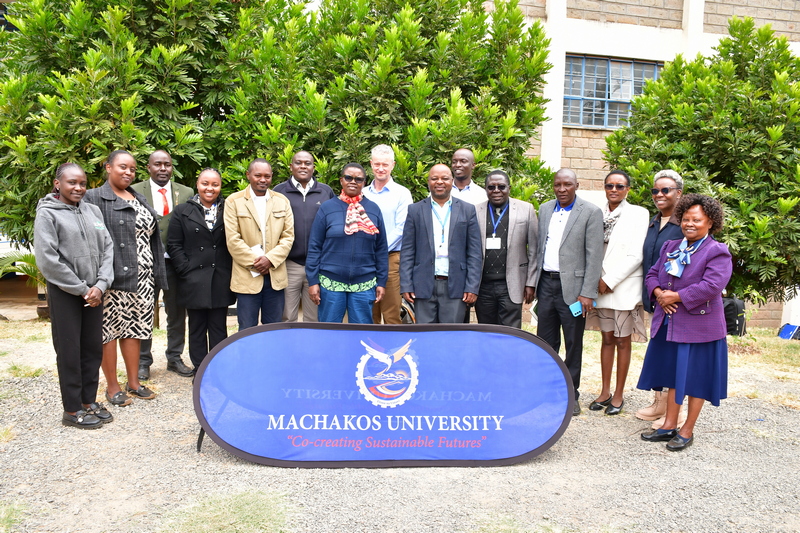
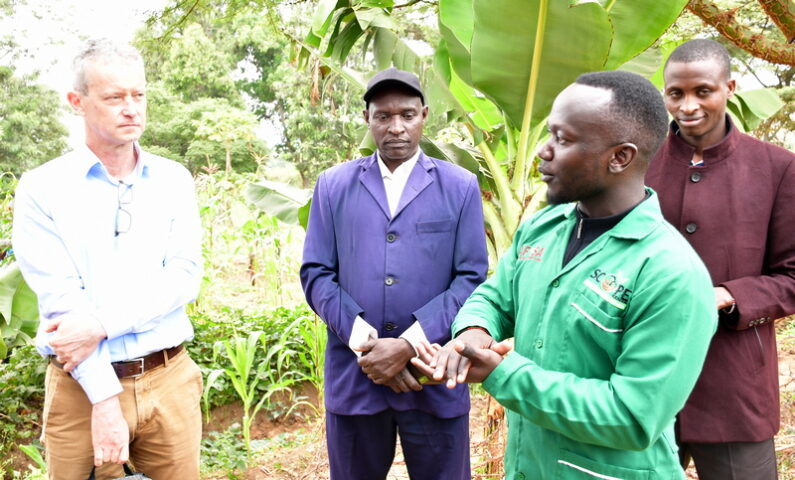
Machakos University, in collaboration with SCOPE Kenya, Alliance for Food Sovereignty in Africa (AFSA), and the International Development Research Centre (IDRC), Canada, today, 1 July 2026, visited Kimua Comprehensive School to understand how school agroecological gardens support school meals programme under the Strengthening Agroecology-based School and College Meal Systems in East and Southern Africa (SABESA) project funded by IDRC with AFSA being the lead organization.
The SABESA project is being implemented in three countries; Kenya, Uganda and Malawi. In Kenya the implementing partners are Machakos University and Schools and Colleges Permaculture Programme (SCOPE) Kenya. The objectives of the project are to improve the understanding of how existing school and college meal systems affect socio-economic dynamics, to pilot and refine agroecology-based school feeding models in collaboration with schools, communities, and smallholder farmers to test their effectiveness and feasibility and to generate evidence-based recommendations for policy integration and scaling of successful agroecology-based school feeding models to promote sustainable, inclusive and agro ecologically informed school meal systems.
The team was led by Mr. John Macharia, the National Coordinator SCOPE Kenya. The IDRC delegation comprised of Mr. Greg Hallen the Division Team leader and Ms. Edidah Lubega, while Machakos University was represented by Dr. Julius Nzeve, Dean of the School of Agriculture, Environment and Health Sciences, and Dr. Esther Nduku, Chair of the Department of Health Sciences, and AFSA was represented by Nicholas Omoding, the Project Officer Research.
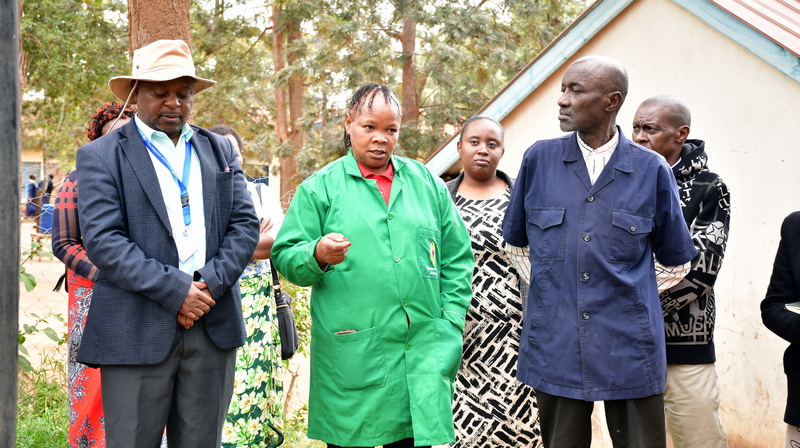
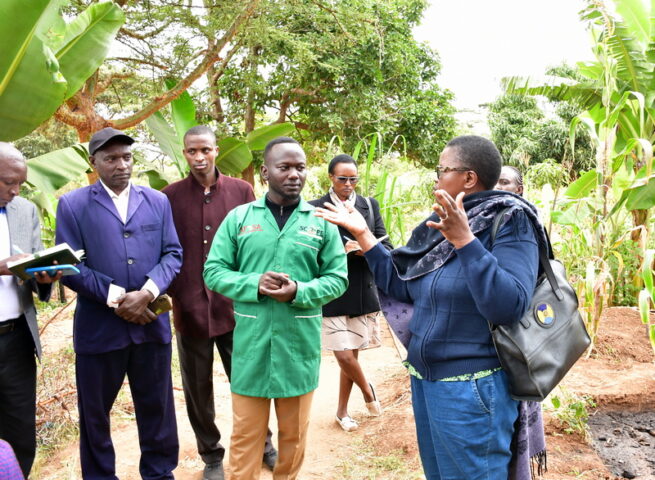
SCOPE Kenya has been working with Kimua Comprehensive school for 3 years supporting agro ecological initiatives through permaculture garden designing for sustainable school meals. The project was designed to address nutritional challenges affecting approximately 290 learners at Kimua Comprehensive School by promoting sustainable food production and improved access to nutritious meals.
The initiative was inspired by the school’s Headteacher, Mr. Michael Muthama, whose vision of enhancing learners’ health and academic performance through sustainable agriculture has grown into a successful community-driven programme. Its achievements have been made possible through the dedication of teachers, parents, community volunteers, and development partners working together to strengthen food security and nutrition.
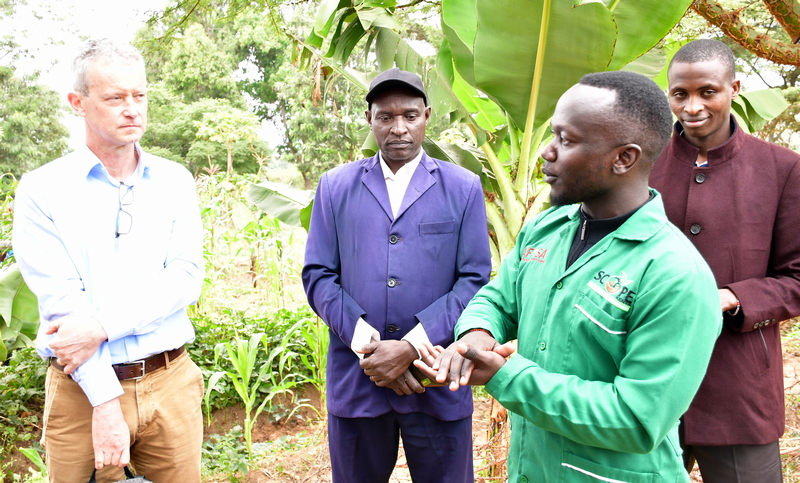
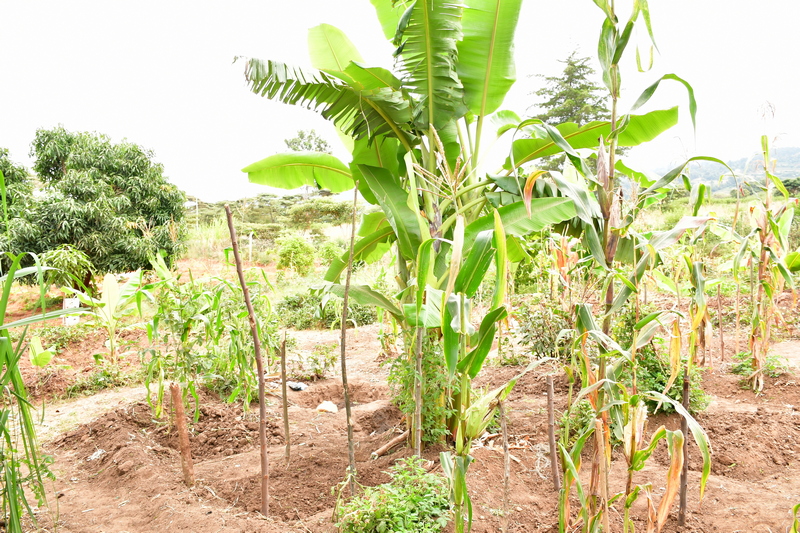
During the visit, the delegation toured the school’s one-acre permaculture designed garden, which showcases climate-resilient and agroecological farming practices. The farm features container gardening, sack gardening, and terraced farming, producing drought-tolerant crops such as sweet potatoes, cassava, and cowpeas alongside bananas, tomatoes, maize, and potatoes. A borehole and water reservoir provide reliable irrigation, ensuring year-round food production.
In support of environmental conservation, the school is also establishing a tree nursery. Machakos University has already donated approximately 400 indigenous tree seedlings to support ecosystem restoration while complementing the school’s sustainable agriculture programme.
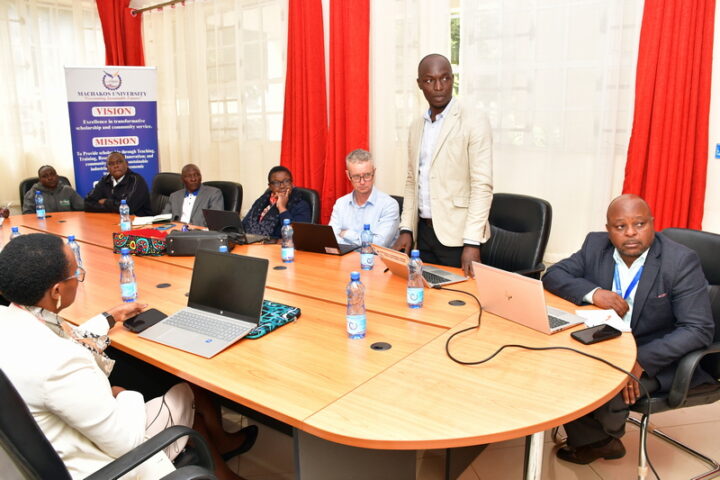
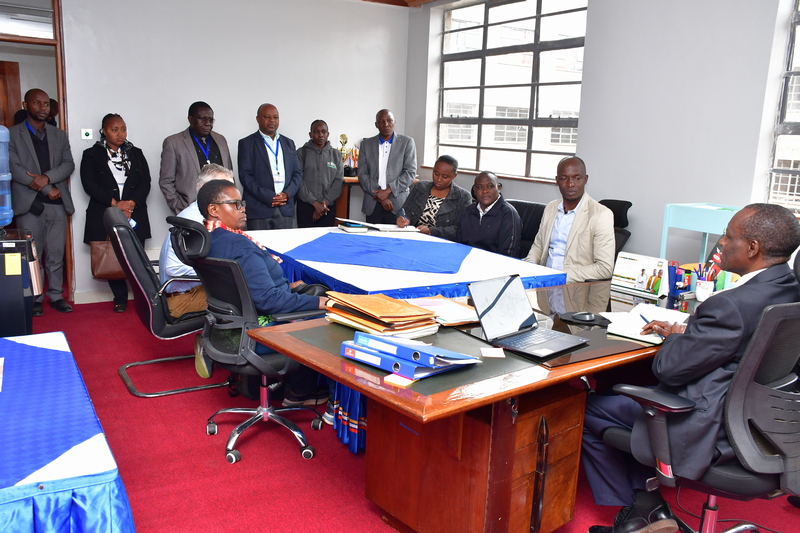
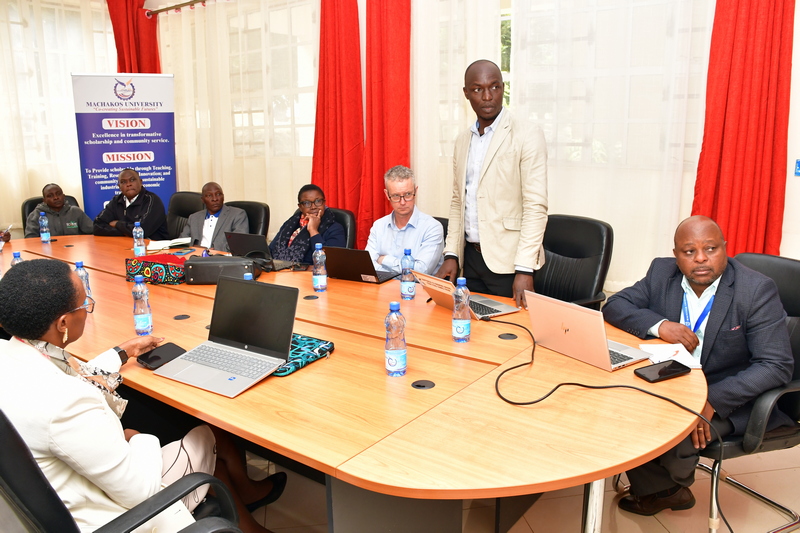
Following the field assessment, the delegation held a debriefing session and paid a courtesy call at Machakos University, where they were received by Prof. Charles Ombuki, Director of the Research, Innovation and Technology Transfer Directorate (RIIT), and Prof. James Muola, representing the Vice-Chancellor, Prof. Joyce Agalo.
Prof. Muola reaffirmed the University’s commitment to strengthening partnerships that promote food security, improved nutrition, climate-smart agriculture, and sustainable community development. He emphasized that collaborative initiatives such as the School Feeding Pilot Programme demonstrate the transformative role of universities in delivering practical, research-driven solutions that improve livelihoods and build resilient communities.
The School Feeding Pilot Programme stands as a shining example of how strategic partnerships can improve learner nutrition, enhance food security, promote sustainable agricultural practices, and empower communities. By integrating agroecology, environmental conservation, and active community participation, the initiative is creating a scalable model for sustainable school feeding and community-led agricultural development.