
Machakos University Hosts Inaugural International Conference on Creative Arts in Higher Education
- Posted by admin
- Posted in University News
Machakos University hosted the 1st International Conference on Creative Arts in Higher Education on 20-21 August 2026 at the University’s Luban Workshop. Organized by Dr. Charles Kebaya and his team, the two-day conference brought together scholars, researchers, practitioners, and other stakeholders drawn from different countries across the globe to examine the emerging and shifting roles of Creative Arts in higher education, technology, culture, innovation, and society.
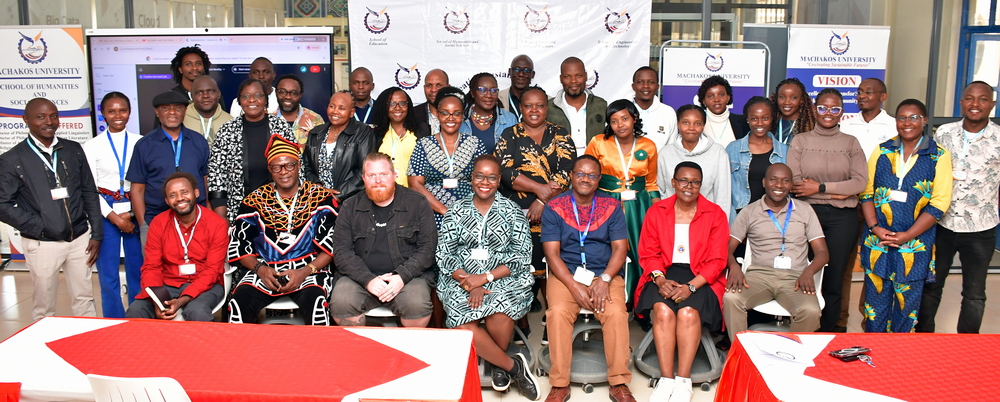
The opening ceremony was presided over by Prof. James Muola, DVC-Academic and Student Affairs, who represented the Vice-Chancellor, Prof. Joyce J. Agalo. In her address, delivered by Prof. Muola, the Vice-Chancellor underscored the importance of creativity, innovation, technology, and interdisciplinary collaboration in shaping the future of higher education, reaffirming Machakos University’s commitment to advancing knowledge and innovation that responds to society’s emerging needs.
Delivering the keynote address, Dr. Joel Ongoto, Deputy Secretary General- Research and Resources Mobilisation, KNATCOM-UNESCO, called for the need for Creative Arts to be repositioned and mainstreamed in higher education to provide learners with 21st Century skills, competences and prepare them for the future of work.
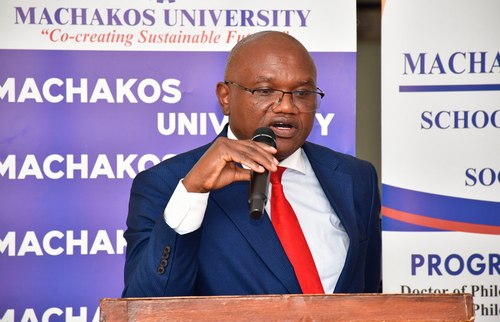
Dr. Ongoto highlighted the growing influence of Artificial Intelligence, digital technologies, automation, climate change and globalization, noting that creativity, imagination, communication, collaboration and storytelling will remain vital skills in the evolving world of work. He urged universities to build stronger bridges between Creative Arts, Science, Technology, Engineering and Business through a more human-centered STEAM approach.
Exploring the Future of Creative Arts
The conference featured thought-provoking discussions and presentations around key sub-themes, including:
- Creative Arts Education and Pedagogy in the 21st Century
- Creative Arts and Practice-Led Education
- Creative Arts and Cultural Technology
- Creative Arts and Artificial Intelligence
- Creative Writing
- Creative Arts and Digitalities
- Creative Arts, Protests and Resistance
- Creative Arts and Entrepreneurship
- Creative Arts and Gender
- Creative Arts and Inclusivity

These thematic areas provided a platform for participants to examine how Creative Arts intersect with technology, entrepreneurship, education, culture, inclusion and social transformation, while responding to emerging opportunities and challenges in the 21st-century knowledge economy.
Dr. Ongoto challenged universities to prepare graduates not merely to seek employment, but to create value, enterprises, intellectual property, knowledge and solutions. He advocated for creative education that is entrepreneurial, digitally literate, research-oriented, ethically responsible, industry-ready and globally competitive. On Artificial Intelligence, he emphasized that the future should not be framed as human versus machine, but as human creativity amplified by responsible technology.
He further proposed practical measures including Creative Innovation Hubs, interdisciplinary programmes, creative entrepreneurship incubators, stronger intellectual-property education, industry engagement, Creative Arts research, AI and digital creativity programmes, cultural heritage digitization and international partnerships.
Machakos University Advancing the Creative Arts Agenda
The successful inaugural conference underscored Machakos University’s growing contribution to advancing Creative Arts, interdisciplinary scholarship, innovation, and digital transformation in higher education. By bringing together academia, practitioners and other stakeholders, the University provided a platform for knowledge exchange and collaboration on the future of the creative economy.
The conference also provided an important foundation for strengthening linkages between Creative Arts, ODeL, ICT, media production, entrepreneurship, and research, with the proposed Creative Arts and Digital Media Innovation Hub offering a potential avenue for translating creative ideas into innovation, skills, enterprises, and impactful solutions.
The conference reaffirmed that Creative Arts are not merely an area of cultural expression, but a powerful driver of innovation, entrepreneurship, employment, cultural identity and sustainable development. As Dr. Ongoto challenged, universities must move Creative Arts from the margins to the mainstream, from classrooms to industries, from talent to enterprise, and from creativity to innovation.